Press Releases

Hidden costs of child car seats

The Hidden Costs in Car Seats

Hidden costs of child car seats

By Peggie Mars
Founder, Wheel Well – Child Road Safety NGO

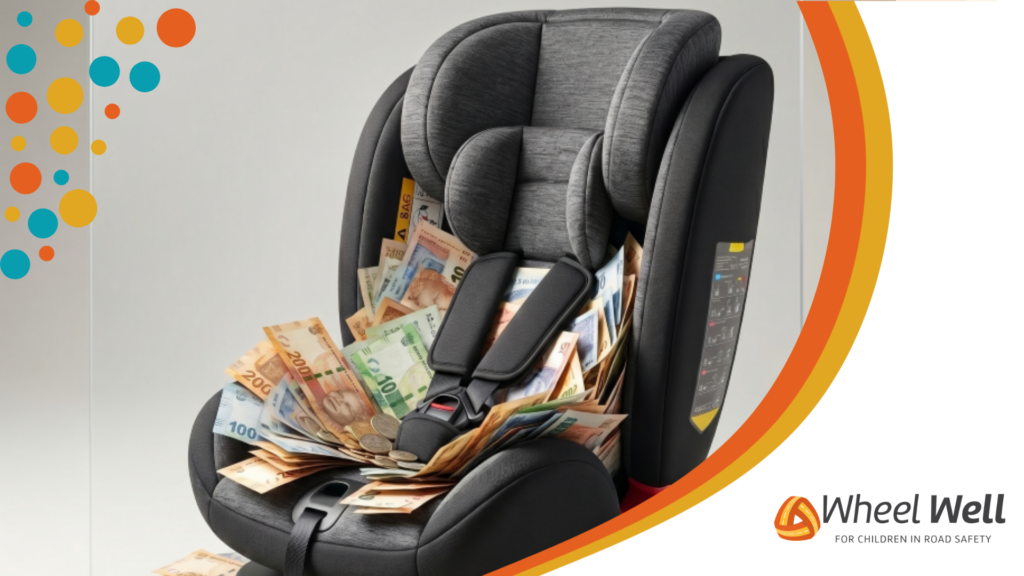
When you stand in a baby boutique or browse an online retailer looking at child car seats, it is incredibly easy to experience a sudden bout of price shock. Prices for a high-quality, multi-stage car seat can stretch into thousands of Rands. On social media, it is common to see heated debates, with some safety advocates pushing extreme narratives that can leave parents feeling judged or overwhelmed by the financial barrier to safety.

But out here in the real world, within a developing economy, we have to look at the facts with a grounded, practical perspective. Why do these life-saving devices cost what they do? Is it just corporate greed and clever brand marketing?

The short answer is no. When you buy a certified child car seat, you are not just paying for plastic, fabric, and foam. You are paying for an extraordinary gauntlet of global engineering, destructive laboratory testing, protectionist import tariffs, and local regulatory compliance.

Let us pull back the curtain and take a deep dive into the hidden physical and fiscal costs embedded in every single legal car seat on South African shelves.

Part 1: The Invisible Crash Test Matrix

South Africa strictly adheres to European safety standards (such as ECE R44/04 and ECE R129), meaning the seats protecting our children are manufactured primarily in Europe and China to meet these rigorous frameworks.

To achieve compliance, a car seat cannot just be crash-tested once. For a multi-stage seat designed to grow with your child from birth up to approximately 12 years old (covering Groups 0+, 1, 2, and 3), the required testing matrix multiplies exponentially.

Consider a typical premium multi-stage seat with this specific design profile:

  • Rear-Facing (Groups 0+ and 1): Installed using the ISOFIX system.
  • Forward-Facing (Groups 2 and 3): Installed using the standard vehicle 3-point seatbelt.

To certify this single physical product, engineers must subject it to a minimum of 20 distinct, high-speed dynamic crash tests. Regulators require that every single orientation, age-appropriate crash dummy, and geometric adjustment be tested to its absolute absolute limits.

The Mathematical Breakdown of a Single Certification

Installation & Group

Dummy Size & Age Equivalent

Seat Adjustment Extremes

Impact Vectors Required

Total Dynamic Tests

ISOFIX Rear-Facing (Group 0+)

Infant Dummy

Fully Upright & Fully Reclined

Front, Rear, and Side

6 Tests

ISOFIX Rear-Facing (Group 1)

Toddler Dummy

Fully Upright & Fully Reclined

Front, Rear, and Side

6 Tests

Seat Belt Forward-Facing (Group 2)

6-Year-Old Dummy

Fully Upright & Fully Reclined

Front, Rear, and Side

4 Tests (Side impact baseline covered per size)

Seat Belt Forward-Facing (Group 3)

10-Year-Old Dummy

Fully Upright & Fully Reclined

Front, Rear, and Side

4 Tests (Side impact baseline covered per size)

Every single one of these 20 tests requires a pristine prototype seat, a highly calibrated crash test dummy packed with sensors, and a specialized laboratory facility. If a single buckle fails, a component cracks prematurely, or a dummy registers forces that are too high, the entire design goes back to the drawing board, and the testing matrix resets.

Part 2: The Component Torture Chamber

The dynamic crash testing gets all the attention on video, but a massive portion of a seat’s development cost is spent in quiet, brutal testing labs where components are subjected to chemical and environmental degradation.

  1. Harness and Buckle Fatigue

The central buckle and harness straps are the only things holding your child in place during a rollover or collision.

  • The 5,000-Pull Test: The harness webbing is mechanically dragged through the central adjuster 5,000 times to simulate years of daily tightening. The strap must not fray, and it cannot slip more than 30 mm across the entire test.
  • The Post-Crash Buckle Test: The central crotch buckle must undergo 5,000 mechanical openings and closings before a crash. Then, immediately following a high-speed collision simulation, a mechanical arm measures the force required to open it. It must open with a force between 40 Newtons and 80 Newtons. This sweet spot ensures a child cannot unclick themselves during a drive, but an adult or emergency responder can easily release them after an accident.
  1. Environmental and Corrosion Resilience

Vehicles endure severe climate shifts, from freezing winter nights to scorching summer afternoons where cabin temperatures can exceed 60 degrees Celsius.

  • The 24-Hour Salt Mist Bath: Every metal component, including the internal steel frame, the ISOFIX anchor tongues, and the buckle springs, is locked in a chamber and sprayed continuously with a 5% salt-mist solution for 24 hours. If even a speck of structural rust or mechanical jamming occurs, the seat fails.
  • Webbing Conditioning: Before the harness straps are pull-tested to failure, they are artificially aged. Samples are exposed to intense UV radiation, submerged in water for a full day, and cycled through extreme temperature chambers.
  1. Toxicity and Flammability

Young children live in close contact with their car seats, often sleeping on the fabric or chewing on the harness pads.

  • Chemical Sweeps: Under strict European EN 71-3 toxicity standards, all textiles, foams, and plastics are chemically audited to ensure zero dangerous migration of heavy metals, formaldehyde, or toxic phthalates.
  • The Burn Rate Test: To give parents crucial time to extract a child from a vehicle in the event of a fire, car seat fabrics must undergo strict flammability testing. The material must resist ignition, and its flame spread rate must be slower than 100 mm per minute.

Part 3: The South African Fiscal Layer

Once a car seat successfully passes this international gauntlet and leaves the factory gates in Europe or China, it heads to South Africa, where a completely new set of structural costs is piled on top of it.

Because we do not have a domestic passenger car seat manufacturing industry, these life-saving devices are treated as imported commodities. By the time a seat reaches a retail shelf, it has accumulated a heavy fiscal stack:

  • 20% Import Duty: Car seats fall under Chapter 94 of the SARS Customs Tariff Book. Because they are categorized alongside automotive and general seating components, they face a steep 20% protectionist import tariff at our ports.
  • The NRCS Per-Unit Levy: Before an importer can legally sell a specific car seat model in South Africa, they must submit the international ECE test results to the National Regulator for Compulsory Specifications (NRCS) to obtain a Letter of Authority (LoA). Besides the administrative costs, the audit comes with a mandatory R11.36 per-unit levy. Critically, this levy must be paid on every single unit landed at the warehouse floor, meaning local companies carry this financial cash-flow burden long before a parent ever buys the seat.
  • 15% Value Added Tax (VAT): Finally, our standard 15% VAT is applied at the point of sale. Because VAT is calculated at the very end of the commercial chain, it compounds directly on top of the shipping costs, the retailer margins, and the 20% import duty, creating a compounding tax-on-a-tax effect.

Balancing the Reality of Road Safety

When we look closely at this entire journey, it becomes clear that a high retail price is not a sign of consumer exploitation. Instead, it is the direct financial reflection of a product that has survived 20 high-speed crashes, a 24-hour acid bath, 5,000 friction cycles, strict toxicological screening, and heavy national taxation.

Understanding these hidden factors helps us move past the hyperbole seen on social media and focus on what truly matters: making sure every child is realistically and effectively protected on our roads.

Securing your child correctly in a verified, legally compliant seat is the single most important step you can take for their safety. To ensure your vehicle is completely ready for the journey, it is equally vital to keep your car mechanical systems in top condition. Regular checks on your brakes, shocks, and tyres are foundational to preventing collisions before they ever happen. For professional vehicle safety inspections and trusted expert advice, a quick visit to your local Supa Quick fitment centre ensures your family travels on a safe foundation.

No matter what car seat fits your budget, always ensure it carries the ECE sticker of approval and an official NRCS clearance. True road safety is built on a foundation of uncompromised engineering, rigorous testing, and real-world awareness.

Wheel Well is a proud winner of the Prince Michael International Road Safety Awards, recognizing achievement and innovation which improves road safety.

The Hidden Costs in Car Seats Read More »

The Halo Beanie Project

Keep a Child Safe and Warm This Winter: The Halo Beanie Project

The Halo Beanie Project

By Peggie Mars
Founder, Wheel Well – Child Road Safety NGO

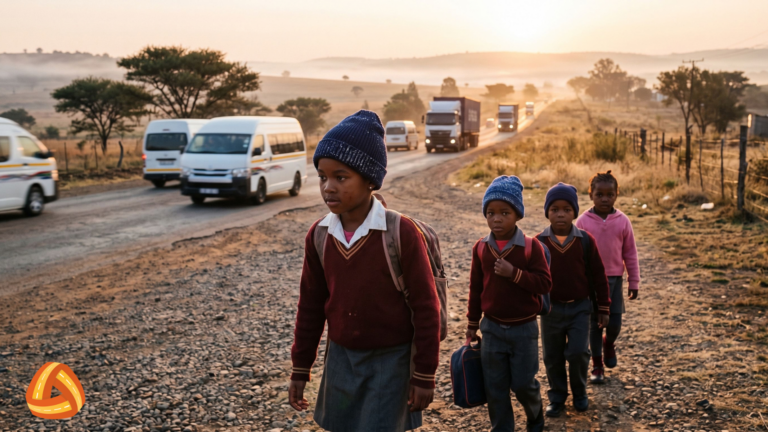
Winter has arrived in South Africa with a vengeance. As snow caps our major mountain ranges and a bitter cold spell settles over the country, many underprivileged children are facing the elements without basic warmth. But for these children, the cold isn’t the only danger: visibility on our roads is a matter of life and death.

In South Africa, pedestrian crashes are the leading cause of injury death for children under 14. In 2024 alone, 734 child pedestrians lost their lives. That is two children every single day.

A Simple, Life-Saving Solution

At Wheel Well, we believe every child deserves to be seen and protected. Our Halo Beanie project provides a passive yet powerful solution: a hand-knitted beanie made with specialized reflective yarn.

  • 360-Degree Visibility: Reflective gear reduces the risk of a pedestrian being hit by a vehicle by 85%.
  • Essential Warmth: These beanies provide critical protection and warmth for young children and babies.
  • Freedom to Play: Unlike bulky gear, beanies don’t restrict a child’s movement in shared community spaces.

Celebrating Our Partners: Supa Quick

We are thrilled to announce that Supa Quick has stepped up to sponsor 30 Halo Beanie bags! Their generous contribution is already putting these life-saving garments into the hands of those who need them most.

Behind every bag, there is a heart at work; currently, dedicated knitters across the country are “knitting up a storm” to turn this support into reality. These talented knitting and crochet groups are the engine of this project, using reflective yarn to create safety for our youth.

How You Can Help

We have passionate knitting and crochet groups ready to work, but we need more materials to keep the momentum going.

  • Sponsor a Beanie Pack: For R3000, you can sponsor a complete “Beanie Pack”.
  • The Impact: Each pack contains enough reflective yarn, wool, and patterns to ensure the safety and warmth of at least 100 children.
  • Join a Knitting Group: If you are part of a knitting or crochet circle and want to contribute your skills, we want to hear from you.

Let’s Light Up the Dark

75% of fatal pedestrian crashes occur at dawn, dusk, or night-time. By sponsoring a pack, you aren’t just buying wool; you are giving a child a “halo” of visibility that could save their life.

Ready to make a difference? Contact Peggie Mars at 072 385 7121 or email peggie@wheelwell.co.za to sponsor a pack or join our knitting community.

Together, we can ensure our children are safe, seen, and warm.

#RoadSafety #HaloBeanies #WheelWell #SupaQuick #SouthAfricaWinter #ChildSafety #CSR #KnittingForACause

Keep a Child Safe and Warm This Winter: The Halo Beanie Project Read More »

NO TRANSPORT, NO EDUCATION: KwaZulu-Natal Is Sacrificing Our Children for a Balanced Ledger

NO TRANSPORT, NO EDUCATION:

NO TRANSPORT, NO EDUCATION: KwaZulu-Natal Is Sacrificing Our Children for a Balanced Ledger

By Peggie Mars
Founder, Wheel Well – Child Road Safety NGO

 KwaZulu-Natal Is Sacrificing Our Children for a Balanced Ledger.

The Numbers of a Crisis

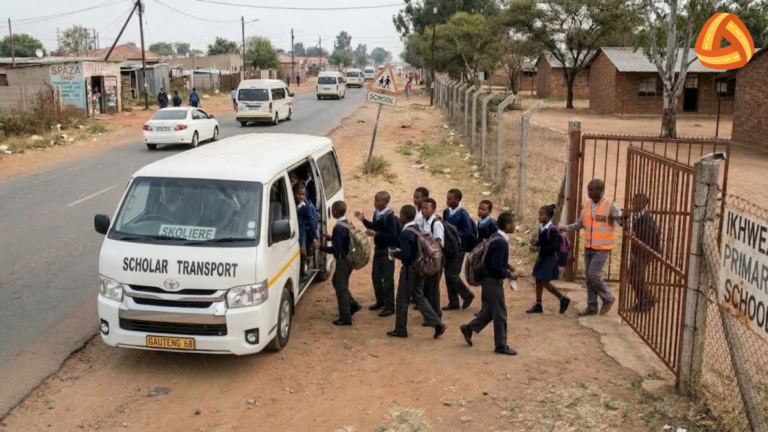
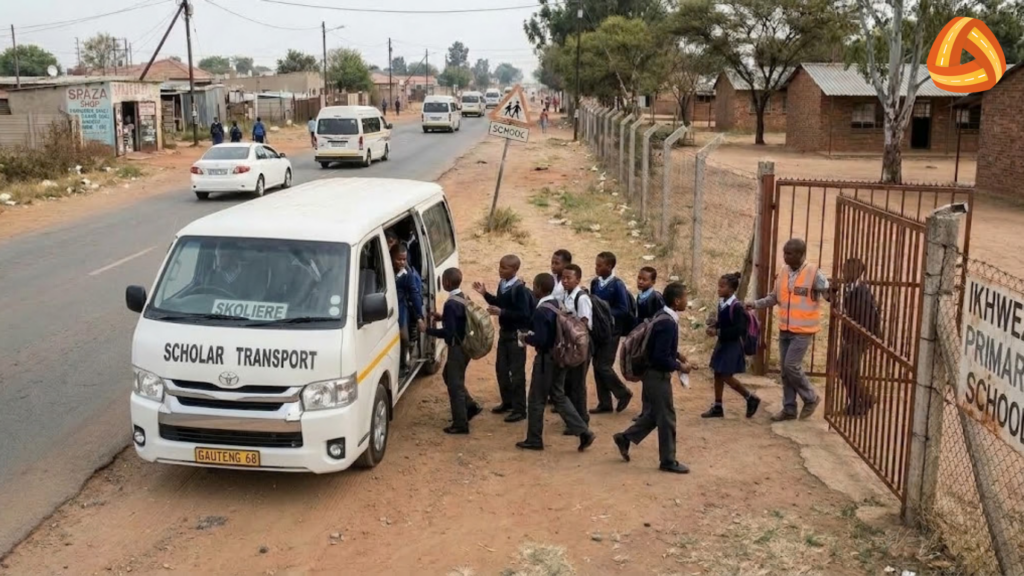
In a briefing that should have sent shockwaves through every home in South Africa, the KwaZulu-Natal Department of Education has confirmed a catastrophic collapse of the scholar transport system.

The budget has been slashed from R669 million to R366 million. To meet this cut, the department is removing 201 buses and 28 taxis from its fleet.

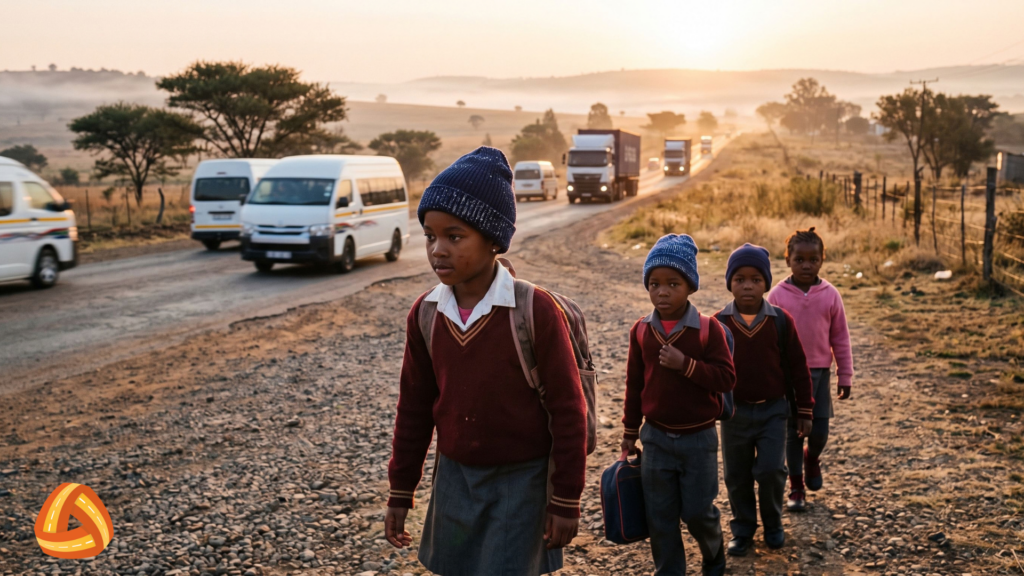
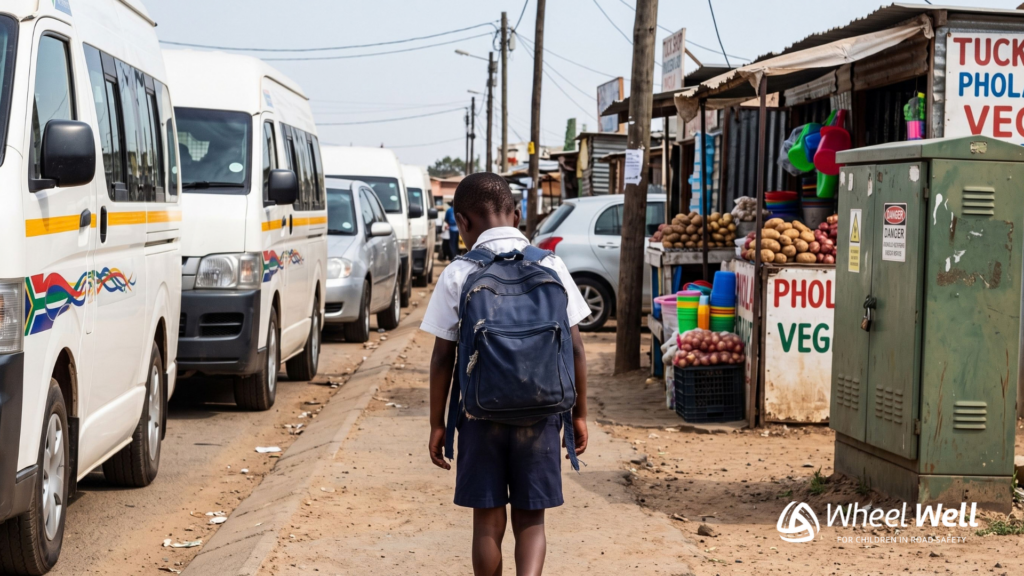
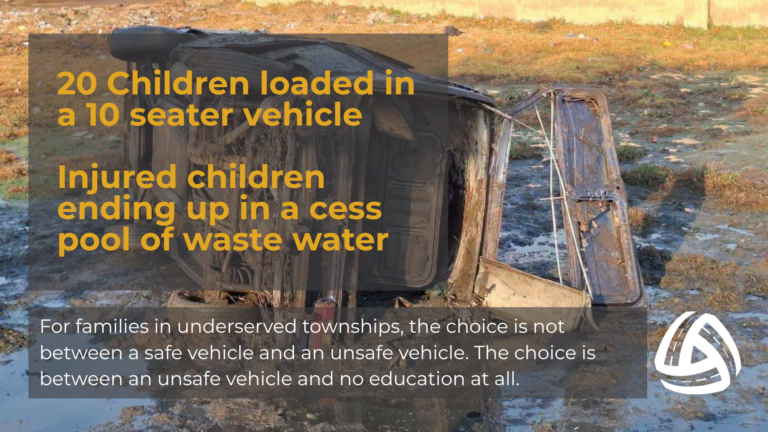
The human cost? 44,000 learners. Starting now, 44,000 children who rely on government transport to access their constitutional right to education are being told to “find their own way.” In a province where rural learners often face 10km to 15km treks through dangerous terrain, this isn’t just a budget cut—it is an eviction from the classroom.

A Message from Wheel Well: Our Children Are Not Negotiable

“At Wheel Well, we have spent years as the only NGO in South Africa focusing exclusively on road safety for children. We know that the most dangerous part of a child’s day is their commute to school. By stripping away vetted, regulated transport, the government is essentially forcing 44,000 children into the ‘informal’ transport sector—overcrowded bakkies, unroadworthy vehicles, and ‘shadow’ operators who answer to no one. We are not just looking at a budget shortfall; we are looking at a massive spike in child fatalities on our roads. We cannot advocate for road safety on one hand while the state actively removes the safest options for our most vulnerable citizens on the other.” Peggie Mars, Founder of Wheel Well

Lest We Forget: January 19, 2026

We must not treat these numbers as mere statistics. We have already seen the price of “making do.”

On January 19, 2026, just three months ago, South Africa mourned the loss of 14 learners in a horrific scholar transport crash. That tragedy was a result of a system where regulation is weak and desperation is high. By removing department-vetted transport, the KZN government is setting the stage for the next January 19th. Every child forced to hitchhike or walk along a high-speed provincial road is a tragedy waiting to happen.

Education is a Right. Safety is a Right.

Section 29 of our Constitution does not say children have the right to education if the budget allows. It says they have the right to Basic Education. When a child cannot physically reach a school because the state has withdrawn its support, that right is being violated. When a child is forced to walk through high-crime areas or cross flooded rivers because the bus was cancelled, their right to Safety and Security (Section 12) is being violated.

A Call for Immediate Intervention

We do not need “pearl-clutching” or “deep concern.” We need the budget to be restored. We need the fleet to be reinstated.

  • To Siviwe Gwarube, Minister of Basic Education: Your department cannot achieve “Quality Education” if the learners aren’t in the building. Intervene in KZN now.
  • To Barbara Creecy, Minister of Transport: Safety on our roads starts with safe, regulated scholar transport. You cannot allow 44,000 children to become “road statistics.”

The KwaZulu-Natal Provincial Government of Unity (GPU) and the National Government must find the R300 million shortfall. We find billions for bailouts and “compensation adjustments”, we can find the money to keep our children safe and in school.

The buses must run. The children must learn. Immediate action, not excuses.

#ScholarTransportCrisis #KZNEducation #WheelWell #RoadSafety #SouthAfrica #RightToEducation #InterveneNow

NO TRANSPORT, NO EDUCATION: Read More »

Wheel Well Annual Report 2024

Wheel Well Annual Report 2024

Wheel Well Annual Report 2024

Message from the Founder
As we reflect on another impactful year at Wheel Well, I am filled with gratitude for the support, generosity, and collaboration that have made our initiatives a success. Together, we are saving lives, creating awareness, and fostering a culture of safety for children on our roads.

Car Seats for Kids Campaign
The cornerstone of our work, Car Seats for Kids, continues to grow in reach and impact.

Activations: 11 events hosted this year, 9 with Supa Quick and 2 with Bakwena, who also makes a monthly contribution to us ensuring the viability of our incredibly special campaign.

  • Car Seats Handed Out:
    • 336 seats distributed at Supa Quick activations.
    • 553 seats distributed in the year to date, with a projected total of 643 by year-end (including December events).
    • Since 2012, a cumulative total of 11,649 car seats have been handed out.
  • Car Seat Donations:
    • 863 used car seats donated by the public.
    • 100 new car seats donated by Supa Quick and 46 by Bakwena.
    • Safeway: 45 new car seats
  • Collection drives:
    • Ongoing through Supa Quick: 524 car seats
    • Be Quick to Click: 165
    • Peg Perego South Africa: 3 new infant seats and 16 car seats collected through participating BP garages.

A special thanks goes to Triple Orange, our sponsor for cleaning products. Their gel and laundry detergent makes sure that the car seats cleaned by us are fresh and free of lurgies.

We are deeply grateful to Renault for sponsoring a branded Triber Express that allows us to do collections and be at our activations.

A special mention goes to Skynet, whose dedicated support has been pivotal to the success of this campaign. As part of their Corporate Social Investment (CSI) initiative, Skynet collects all the donated car seats from Supa Quick dealerships and ensures they are delivered to Wheel Well. This essential service has streamlined our operations and allowed us to get car seats into the hands of families who need them most. We are deeply grateful for their generosity and efficiency.

These collective efforts have significantly contributed to reducing child road fatalities and increasing awareness of the importance of proper child restraint use.

Halo Beanie Campaign
Our Halo Beanies initiative continues to brighten young lives and increase visibility for child pedestrians.

We have 2 components to this campaign: ready-made beanies with reflective tape sewn on and the handmade beanies with reflective yarn incorporated.

  1. Heartfelt Thanks to Our Sponsors
    We extend our deepest gratitude to:
  • Supa Quick and Dooya for their generous sponsorships of Halo Beanie Bags
  • Suzuki South Africa for their sponsorship of 1000 ready made beanies to be handed out at schools of their choice.
  1. Knitting Groups and Distribution Highlights
    The dedication and craftsmanship of our knitting groups were instrumental in the success of this year’s campaign:
  • Sylvia and her crochet group in Alexandra crocheted 100 beanies that were distributed to hurricane victims in Tongaat.
  • 200 beanies knitted by the ladies of St John’s Village were distributed to children in Kokstad.
  • African Brain Child took custody of 2 beanie packs and they were knitted by the International Women’s Club, Cape Town Chapter. They were so enthusiastic that they bought more wool and reflective yarn to knit extra beanies! These Halo Beanies have been distributed at Red Cross Hospital during weekly rounds as well as to Yabonga in Khayelitsha.
  • The Rotary Club of Meyerton and Henley-on-Klip’s knitting groups contributed 200 beanies, which were handed out at local primary schools.
  • The incredible efforts of SAVF Elderly Care Facilities resulted in 1,155 reflective beanies, distributed to children across Gauteng, North West, Limpopo, and Mpumalanga.
    • SAVF Children and Youth Care Centers (CYCCs) received 250 beanies, and Early Childhood Development Centers (ECDs) received 75 beanies, ensuring children in rural areas benefited directly from the campaign.
    • Additional outreach involved 8 schools (4 primary and 4 high schools) in four provinces, with 50 beanies donated per school.
    • 75 halo Beanies will be handed out at a Back-to-School event early next year.
    • Special recognition goes to SAVF for their impactful outreach in Mpumalanga, where 430 beanies were distributed to a school community grieving the loss of children who tragically died walking home. This effort was accompanied by post-traumatic counselling for students, teachers, and parents.
  1. Empowering Through Craft
    This initiative gave elderly participants the opportunity to “knit for a cause,” fostering a sense of contribution and community. The effort also sparked healthy competition among SAVF facilities to knit beyond the initial wool allocation, demonstrating their dedication and creativity.

The Halo Beanie Project continues to reflect the essence of Wheel Well’s mission: to safeguard children’s lives and empower communities. We look forward to expanding this life-saving initiative in 2025.

School Talks on Safety and Life Skills
This year, we conducted 19 school talks at secondary schools, focusing on practical and life-changing topics such as:

  • Vehicle safety inspections.
  • Demonstrations of safety equipment to manage emergencies, including reflective vests, warning triangles, and fire extinguishers.
  • Tyre safety basics to prevent collisions.
  • The Rotary Four-Way Test as a tool to guide ethical decision-making and navigate life’s challenges.

A special thank you to Bridgestone South Africa for their incredible support and invaluable insights in making this project a success. Their partnership has allowed us to reach and empower young drivers with the knowledge to stay safe and confident on the road.

Be Quick to Click Campaign
This year saw the continued success of our Be Quick to Click campaign during October, an educational initiative by African Brain Child, that empowers parents with knowledge about child restraints and Traumatic Brain Injury prevention. Supa Quick sponsored 100 brand new car seats that were handed out at Supa Quick Constantia. Our deep thanks to our generous sponsor, Supa Quick for their enthusiastic support of this campaign. Thanks also goes to African Brain Child for all their hard work in raising awareness on Traumatic Brain Injury affecting children in South Africa. This has become a powerful collaboration in raising awareness and educating parents on the basics of safe car seat usage. The car seat collection drive that forms part of this campaign resulted in 165 car seats donated.

Celebrating the Wheel Well Team
None of our achievements this year would have been possible without the extraordinary contributions of the Wheel Well team:

  • Theresa, our car seat expert, has been an invaluable resource, generously sharing her extensive knowledge with parents.
  • Ivan, our talented graphic artist, ensured our materials were visually engaging and impactful.
  • Nick from NADM Design, who crafted our cohesive and informative website, provided a window into what Wheel Well stands for.
  • Our board members: Yolandi Grundeling, Charmaine van Wyk, Pertunia Sibanyoni. Miles Benfield and Marilyn Rukande for their ongoing support and inspiration.

The team’s dedication to creating a reservoir of car seat knowledge and curating an impactful social media presence has been instrumental in our success.

Recognition
Our founder Peggie Mars is deeply honoured to have been recognized with a Paul Harris Fellowship by Rotary International a testament to our dedication to community service.

Looking Ahead
As we close the year, our resolve to protect children on South African roads remains stronger than ever. In 2025, we aim to extend our programs further, introduce new innovations, and engage even more partners and donors in our mission.

Thank you to everyone who has walked this journey with us—your belief in our cause is what drives us forward. Together, we are making roads safer, one child at a time.

With gratitude,
Peggie Mars
Founder, Wheel Well

Wheel Well Annual Report 2024 Read More »

Scroll to Top