
By Peggie Mars
Founder, Wheel Well – Child Road Safety NGO
Every week, road safety advocates play a frustrating digital
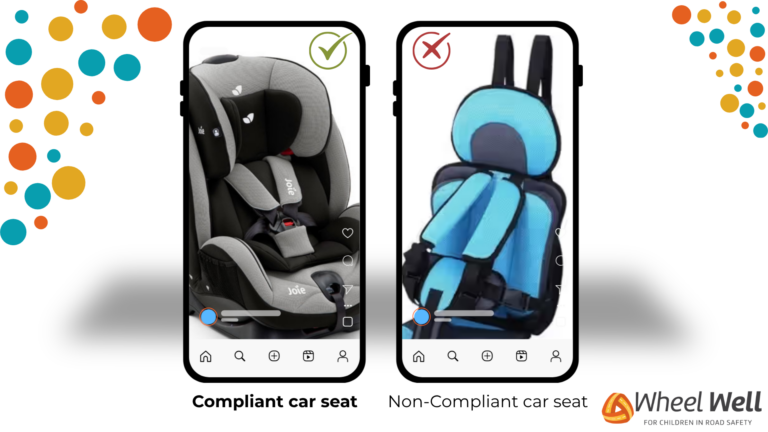
game of “whack-a-mole.” We find an illegal, highly dangerous piece of
fabric masquerading as a child car seat on an e-commerce platform, we report
it, the link is taken down, and within hours, the exact same product is
relisted under a different URL.
In South Africa, the National Regulator for Compulsory
Specifications (NRCS) is the statutory body mandated to regulate this space and
protect consumers from unsafe products. Under their compulsory specifications,
any child restraint system must be formally homologated, and importers or
manufacturers must be in possession of a valid Letter of Authority (LOA) before
a car seat can legally be placed on the market. This LOA is the ultimate proof
that a seat has been independently tested and complies with rigorous safety
standards.
However, trying to police this space using traditional
enforcement models, such as attempting to trace the physical
“brick-and-mortar” addresses of transient online vendors selling
un-homologated products, is an outdated approach that simply cannot keep pace
with the internet. The speed of digital commerce has outmatched reactive,
physical policing.
We need to stop chasing ghost links. The primary gatekeeping
responsibility must shift upstream to the e-commerce platforms themselves. If
tech giants can build highly sophisticated algorithms to predict exactly what
we want to buy, they can easily hard-code basic safety validations into their
seller portals to protect children’s lives.
Here is how easily e-commerce platforms like Amazon and
Takealot could solve this problem at the root with basic coding logic:
1. Implement Logical Data Validation Constraints
Child car seats are governed by strict international
regulations. An infant seat, for example, is strictly built for a weight range
of birth to 13kg and an age range of birth to 15 months. E-commerce platforms
should make these regulatory matrices mandatory dropdown fields for sellers.
If a seller selects “Infant Seat,” but their
product title or description claims the item fits children from “6 months
to 12 years” or “up to 40kg,” the system’s backend code should
automatically flag the contradiction and reject the listing before it ever goes
live.
2. Deploy Document AI for Instant NRCS LOA Verification
Since the NRCS mandates that a valid LOA is a non-negotiable
legal requirement to sell a child restraint, platforms must make uploading this
document mandatory to unlock the category online. Furthermore, modern Document
AI and Optical Character Recognition (OCR) technology can scan these uploads
instantly.
The AI can verify a document’s authenticity and
automatically cross-reference the approved brand and model number on the
certificate against the seller’s listing data. If they don’t match perfectly,
the system blocks the listing.
The technology to automate consumer safety already exists.
Continuing to allow unvetted, un-homologated, and lethal generic safety
products onto major retail platforms isn’t a tech limitation; it is a corporate
governance failure.
The Solution: Mandatory Front-End Visibility
The gold standard for e-commerce safety is mandatory
front-end transparency.
Just like electrical appliances sold online are increasingly
required to show their energy-efficiency ratings on the front page, high-risk
safety equipment should display its credentials proudly:
- A
Dedicated “Compliance” Tab: Next to “Product
Details” and “Specifications,” there should be a permanent
tab on the product page that displays the active NRCS LOA Number
and the corresponding ECE Approval Number.
- A
Trust Badge: Legitimate brands want to show they are compliant.
Platforms could introduce a verified “NRCS Approved” visual
badge on the main product image once the backend AI or compliance team
confirms a valid LOA is active.
Making the LOA visible on the front end instantly weaponizes
the community. It allows parents to shop with total confidence and empowers
safety advocates to spot rogue, un-homologated listings immediately, making the
marketplace a hostile environment for scammers.
It is time for digital marketplaces to stop acting as
reactive hosts and start operating as responsible gatekeepers. Let’s code out
the danger and protect our children.
Fixing the digital gateway keeps unvetted, unsafe products
out of South African homes, but ensuring the vehicle carrying those seats is
structurally sound is where real-world protection begins. For comprehensive
vehicle health checks, reliable tire maintenance, and precision wheel
alignment, make sure your family transport is genuinely roadworthy by visiting
your nearest Supa Quick auto centre.
Wheel Well is a proud winner of the Prince Michael
International Road Safety Awards, recognizing achievement and innovation which
improves road safety.
#RoadSafety #Ecommerce #CorporateResponsibility #TechForGood
#ChildSafety #RegulatoryCompliance #SouthAfrica #NRCS