
By Peggie Mars
Founder, Wheel Well – Child Road Safety NGO
Redefining Transport Poverty: Why Scholar Transport Needs Systemic Support, Not Scapegoats
Redefining Transport Poverty Beyond Fares
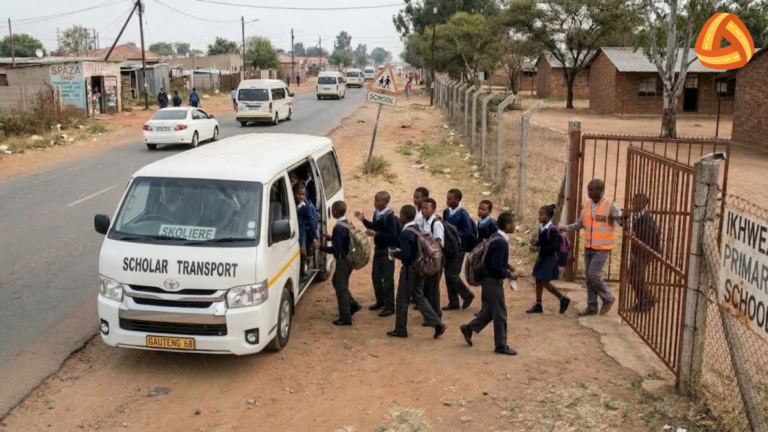
When an overcrowded minibus or an open light delivery vehicle carrying school children is stopped at a traffic checkpoint, public commentary follows a familiar pattern. Outrage floods social media, blaming the driver for reckless greed and questioning the responsibility of the parents. This reaction completely misunderstands the daily realities facing working-class families across South Africa.
Transport poverty is not simply a matter of ticket prices. It is the systemic absence of safe, reliable, and accessible public mobility options. Low-income parents do not place their children in overloaded bakkies or unlicensed minibuses out of neglect. They do so because municipal bus networks bypass their communities, passenger rail services remain broken or non-existent, and walking several kilometres along unlit, high-speed arterial roads exposes children to extreme danger. For millions of households, commercial vehicle safety is an unaffordable luxury. When access to basic schooling is at stake, parents are forced into an excruciating compromise between physical danger and educational exclusion.
The physical burden of this compromise falls squarely on the children. Young learners endure two-hour morning journeys seated on metal benches or huddled together in open load beds in freezing winter weather. When transport fails entirely, children must navigate complex road networks on foot. South African crash data confirms that pedestrian trauma remains the single leading cause of child injury death for children under the age of 14. In 2024 alone, 734 child pedestrians lost their lives, with three-quarters of fatal crashes occurring during dawn, dusk, or night hours when visibility is severely compromised. Whether riding unrestrained inside ageing vehicles or walking along road shoulders without pedestrian crossings, vulnerable learners bear the daily physical cost of a fractured transport network.
The Operator Trap: When Safety Competes with Survival
Public commentary frequently depicts informal scholar transport operators as reckless opportunists who willingly endanger children for profit. A realistic assessment of the transport economy reveals a far more sobering picture. Most informal scholar transport providers are single-vehicle owner-drivers from the very communities they serve, attempting to sustain a household on threadbare margins.
Their monthly earnings are capped by what struggling parents can scrape together. If an operator raises fares to fund preventative maintenance, families cannot absorb the cost and must withdraw their children, forcing them into high-risk pedestrian commutes. The result is an operation with virtually zero operational surplus.
When fuel prices climb, food prices rise, and general inflation eats into daily income, vehicle maintenance is inevitably deferred. Bald tyres, degraded brake linings, worn shock absorbers, and broken seatbelts are rarely the product of conscious indifference. They are the clear symptoms of severe cash-flow insolvency. The operator faces an immediate choice between putting food on the table tonight or purchasing a new set of tyres to replace those worn smooth by unpaved township roads. Immediate survival inevitably competes with preventative maintenance.
This structural trap is deepened by an indefensible public spending disparity. South Africa spends billions of Rands subsidising formal commuter bus contracts and metropolitan passenger rail. Meanwhile, the informal scholar transport industry, which carries the nation’s future workforce every school day, receives zero operational subsidy, zero capital assistance, and zero fleet maintenance support. We expect informal operators to deliver global safety standards while operating inside an economic void.
The Safe System Flaw in October Campaigns
October marks National Transport Month, bringing high-visibility roadside blitzes, vehicle impoundments, and official press releases celebrating the number of unroadworthy scholar vehicles removed from circulation. While taking hazardous vehicles off the road is legally justified, treating punitive enforcement as the primary solution to scholar transport challenges is fundamentally flawed.
Impounding an unroadworthy scholar transport vehicle without providing a safe, affordable alternative does not solve the underlying transport crisis. It strands children on the side of the road, forces them onto dangerous walking routes, and destroys a household livelihood in an instant. The underlying market conditions remain identical: dozens of children still need transport the following morning, parents still cannot pay higher fares, and another financially vulnerable driver will step into the void with an equally worn vehicle.
A genuine Safe System approach, adapted to the realities of a developing economy, recognises that road safety cannot be achieved through punitive measures alone. Safe System principles dictate that system designers, transport authorities, and enforcement agencies share responsibility for safety outcomes. When an economic structure makes safe operation financially impossible for an entire category of transport providers, the failure lies within the system itself, not merely with individual road users. A sustainable safety policy must protect operators and passengers from systemic economic failure rather than relying exclusively on traffic fines.
Institutional Accountability: Framing CRF as a National Crisis
We must change the language and the urgency with which our country approaches child road trauma. At Wheel Well, we insist on recording and confronting these tragedies under a clear, uncompromising framework: Child Road Fatalities (CRF).
CRF must be treated with the highest institutional weight, urgency, and moral gravity. Every CRF represents a devastating breakdown in adult stewardship, road infrastructure, vehicle compliance, and child injury prevention.
In South Africa, the human toll inside vehicles is immense, with 411 children under the age of 14 killed as vehicle passengers in 2024 alone. CRF is not merely private family grief. It represents an intolerable loss of future human capital and a severe, ongoing public health crisis within our developing economy.
We must address this crisis through three decisive pillars of accountability:
- Preventable Systemic Failures: We must stop referring to child deaths as unavoidable “accidents.” While child car seats are vital for private passenger cars, bulk scholar transport vehicles, including minibuses, midibuses, and light delivery vehicles, are structurally and economically incompatible with conventional car seats. In bulk scholar transit and shared school environments, true child injury prevention depends on systemic engineering controls. Foremost among these is the mandatory implementation and strict enforcement of 30km/h speed limits in school zones. Lowering vehicle speeds directly alters the physical forces of a collision, dramatically increasing survival rates for both child pedestrians and vehicle occupants during an emergency.
- The National and Demographic Toll: Road trauma drains public healthcare resources and robs South Africa of its potential. A developing economy cannot prosper when the daily journey to the classroom carries lethal risks for its young learners.
- Demanding Accountability: Transport departments, municipal authorities, and regulatory bodies must move past official lethargy. We must demand practical mechanisms that integrate informal scholar transport into a supported, regulated safety framework.
When severe crashes do occur, families trapped in transport poverty often struggle to navigate complex statutory claim procedures. In these traumatic circumstances, having direct, professional guidance is crucial. Reputable claims management services, such as the support provided through RoadCover, provide essential assistance by helping road crash victims and their dependents secure their statutory benefits from the Road Accident Fund without surrendering substantial portions of their payout to contingency legal fees.
Practical Interventions Over Condemnation
Eliminating CRF requires setting aside moral condemnation and implementing practical, scalable interventions that meet operators where they are:
- Subsidised Vehicle Health Inspections: Transport authorities should introduce free, non-punitive testing stations where operators can have tyres, brakes, suspension, and steering checked without fear of immediate impoundment.
- Mobile Compliance Support Units: Rather than staging roadblocks exclusively for enforcement, deploy mobile support units directly to scholar transport pick-up points to assist drivers with safety checks and permit regularisation.
- Fitment Network Partnerships: Establish collaborative initiatives that provide small operators with subsidized access to critical vehicle running gear, including safety-critical tyres, brake pads, and shock absorbers.
- Pedestrian Visibility Gear: Because scholar transport routes inevitably include pedestrian links along unlit roads, initiatives like the Wheel Well Halo Beanie Project equip young learners with high-visibility reflective headwear, providing simple, passive protection during dark morning and evening commutes.
- Dedicated Passenger Safety Programs: For younger children and families travelling in private passenger vehicles, our Wheel Well Car Seats for Kids Campaign continues to collect, inspect, and recondition donated car seats to make certified passenger restraints accessible to those who need them most.
Protecting Commuters Through Proactive Vehicle Care
Vehicle roadworthiness is the primary physical defence against road trauma, and proper maintenance is non-negotiable when transporting precious passengers. Critical running components, especially tyres with sufficient tread depth, responsive brake assemblies, and functioning shock absorbers, determine whether a vehicle can stop safely in an emergency. We urge transport operators, fleet owners, and every South African driver to prioritize preventative maintenance by visiting their nearest Supa Quick Fitment Centre. With a trusted national network of certified technicians, Supa Quick delivers professional tyre checks, computerized wheel alignment, and comprehensive brake inspections to keep our vehicles dependable and our children safe on every trip.
Sustainable child injury prevention requires cooperative solutions, shared responsibility, and practical investment.
Learn more about our initiatives or partner with us by visiting the Talk to Us.
Wheel Well is a proud winner of the Prince Michael International Road Safety Awards, recognizing achievement and innovation which improves road safety.