
By Peggie Mars
Founder, Wheel Well – Child Road Safety NGO
When a motor vehicle collision occurs on South African roads, the immediate focus naturally rests on rapid response, extrication, and physical triage. Yet for the smallest victims of road trauma, the immediate aftermath of a crash is a disorienting, terrifying experience. Behind the sirens and flashing lights, a deeply distressing scene unfolds inside the cabin of an ambulance: an injured child, separated from caregivers or surrounded by injured family members, struggling to comprehend acute physical pain.
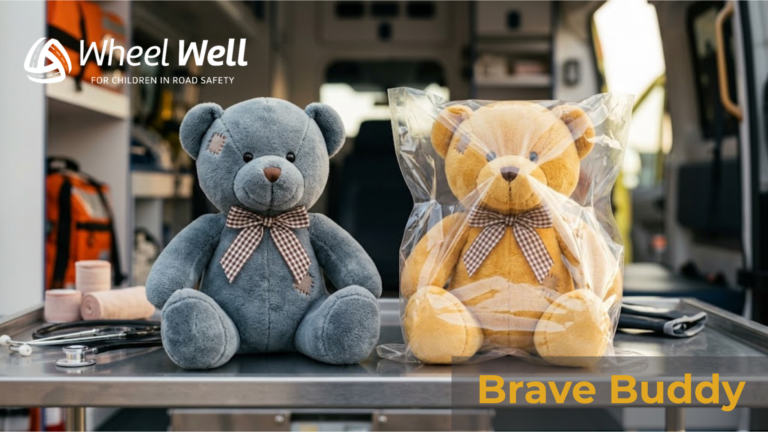
To confront this prehospital reality, Wheel Well is proud to introduce Brave Buddies, a targeted post-crash intervention designed to place clinical comfort care directly into the hands of frontline emergency medical personnel.
Understanding the Hidden Scale of Road Trauma
South Africa faces an acute crisis regarding Child Road Fatalities (CRF). Every child lost on our road network represents a profound public health emergency and an irreversible drain on the nation’s human capital. These losses cannot be brushed aside as unavoidable accidents. They are predictable, preventable systemic failures rooted in inadequate infrastructure, inconsistent traffic enforcement, and widespread neglect of proper restraint use.
The crisis does not stop at fatality figures. Data from the Red Cross War Memorial Children’s Hospital highlights a severe injury pyramid: for every child lost to road trauma in South Africa, another 4.9 children sustain catastrophic, life-altering injuries, and 14.9 endure moderate, painful harm.
Child injury prevention demands that our duty of care spans the full spectrum of road safety, extending from primary preventative measures like the Car Seats for Kids programme and the pedestrian Halo Beanies project to effective post-crash management. If systemic breakdowns lead to a child being injured, the emergency care response must be immediate, compassionate, and equipped to treat young patients effectively.
The Physiological Danger of Acute Paediatric Distress
Emergency care providers operate under the critical standard known as the Platinum Ten Minutes, the window during which prehospital stabilisation dictates long-term clinical outcomes. For adults, communication during this window is relatively straightforward. For young children, the reality is starkly different.
Children frequently lack the vocabulary or developmental capacity to verbalise specific pain points when overwhelmed by fear. When a frightened child enters an ambulance environment, the resulting terror triggers an intense sympathetic catecholamine surge. This physiological stress reaction drives heart rates up, forces shallow and rapid breathing and burns through limited oxygen reserves. In a child dealing with internal trauma or blood loss, unmanaged agitation is not merely emotional distress; it is a clinical complication that actively destabilises vital signs.
Public Emergency Medical Services (EMS) fleets manage heavy operational demands with tight resources. Paramedics routinely find themselves without non-pharmacological tools to calm a terrified paediatric patient, making triage and basic physical examinations an uphill battle.
Brave Buddies: A Low-Cost Clinical Bridge
Brave Buddies addresses this operational gap by deploying individually sealed, single-patient 20cm plush comfort bears onto EMS vehicles across the country. While simple in design, the Brave Buddy serves three distinct clinical and diagnostic functions inside the ambulance:
- Diagnostic Pain Localization: Rather than asking an uncommunicative, crying child where their body hurts, a paramedic can ask the child to show where their buddy is hurt. This simple shift bridges developmental communication barriers, enabling accurate assessment of abdominal, pelvic, or extremity injuries without increasing panic.
- De-escalating the Examination: Medical instruments can look threatening to a young patient. Paramedics can demonstrate a stethoscope placement or a blood pressure cuff on the bear first, establishing rapport, easing tension, and allowing for calm neurological and visual assessments.
- Metabolic and Emotional Stabilization: Functioning as a transitional object, the bear restores a sense of agency and safety. Soothing terror lowers acute sympathetic stress, which directly helps normalise elevated respiration and pulse rates during transport.
Infection control standards are non-negotiable in prehospital care. Every Brave Buddy is individually sealed, reserved for single-patient use to prevent contamination, and stays with the child throughout their hospital stay as a source of ongoing comfort.
Operational Scalability and Fleet Sponsorship
The Brave Buddies model does not require legislative reform, lengthy regulatory approvals, or costly overhauls of ambulance station protocols. Because paediatric calls represent under 10% of total emergency dispatches, stocking vehicles creates a negligible physical footprint while delivering outsized therapeutic value.
Wheel Well has structured the programme to give corporate sponsors, fleet managers, and community donors complete transparency. At an investment of R85 per bear, support can be directed into clear action packages:
- Pilot Fleet Pack (R4,250): Equips 5 ambulances with 50 bears to protect 50 children in acute trauma.
- Station Sponsor (R12,750): Equips an entire station’s fleet of 15 ambulances with 150 bears.
- Regional Fleet Partner (R42,500): Covers 50 ambulances with 500 bears across a wider district.
- Provincial Champion (R85,000): Outfits 100 ambulances with 1,000 bears, creating a broad regional safety net.
Organisations and individuals ready to support this initiative can connect directly with our team through the Wheel Well Talk to Us page to coordinate fleet sponsorships.
In the complex aftermath of a serious crash, post-incident trauma management also involves navigating the financial and legal administrative hurdles associated with hospitalisation and recovery. Navigating the Road Accident Fund claims process can easily overwhelm an already distressed family. Utilizing services like RoadCover helps ease this burden by guiding crash victims through the claims procedure with direct support, ensuring families access their statutory benefits without losing a substantial portion of their payout to legal fees.
Supporting the Chain of Safety Through Vehicle Health
A reliable post-crash emergency system is indispensable, but preventing mechanical failure remains one of the most effective ways to protect young lives on our roads. Safe driving practices must be backed by consistent vehicle maintenance. Ensuring that tyres have adequate tread depth, braking systems respond instantaneously, and shock absorbers maintain steady road contact is essential for collision avoidance. Wheel Well strongly urges every motorist and transport operator to visit their local Supa Quick Fitment Centre for regular safety inspections. Maintaining roadworthy tyres, responsive brakes, and sound suspension components creates a vital buffer that can prevent a collision entirely, keeping children safe inside their restraints and off the trauma register.
Wheel Well is a proud winner of the Prince Michael International Road Safety Awards, recognizing achievement and innovation which improves road safety.
Wheel Well is a proud winner of the Prince Michael International Road Safety Awards, recognizing achievement and innovation which improves road safety.